Three float fishing tips that finally got me hooking salmon
When I started float fishing for salmon I was doing everything roughly right and still getting nothing. Three adjustments changed that, and none of them cost money.
Start your drift far enough upstream that the float settles and the bait sinks before it reaches the fish. Run a longer leader under the float than feels necessary. And hold the float back slightly as it drifts, so the bait leads and the fish sees it before it sees your line.
Most beginner float fishing advice is about gear. Gear wasn't my problem. I had a decent rod, the right float, and roe that should have worked. My drift was wrong: where it started, how deep it ran, and what the fish saw first.
These are the three things that changed it, in the order they mattered.
1. Start the drift further upstream than the fish
The mistake I was making was dropping my float more or less on top of where I thought the fish were. That gives the bait no time to get down. The float lands, the bait is still up near the surface, and by the time it has sunk to fish level the drift is already past the holding water.
Start well above the target. You want the float to land, settle upright, and the bait to sink to depth before the rig reaches the pocket you want to fish. On a small creek that might be three or four metres upstream. In heavier water it's further.
The other part of this is the drift path. Pick a starting position where the current will carry the float through the holding water naturally, without you steering it. If you have to mend hard halfway through to keep it in the seam, you're standing in the wrong place. Move, and start again. Reading where the current will take your float is the same skill as reading where fish hold. It's the same water, looked at from the other direction.
2. Use a longer leader than you think you need
This is the one that surprised me most. I was setting my leader to what I guessed the depth was, and consistently running too shallow.
Salmon in a river sit low. They won't come up for a bait drifting a foot over their heads, especially in cold or clear water. If your bait isn't occasionally ticking bottom, it's probably above the fish for the whole drift.
Set the leader slightly longer than your read of the depth, and adjust from there. You want the occasional touch of bottom, because that tells you you're deep enough. Constant dragging means you've gone too far and you'll snag or drift unnaturally. Nothing at all usually means too short. When you move to a new pool, reset it. The depth that worked in the last run rarely carries over.
3. Hold the float back so the bait leads
Left alone, a float travels at surface speed while the bait underneath it drags behind in slower water near the bottom. The fish sees the leader, and sometimes the float, before it sees the bait.
Holding the float back fixes that. Apply light tension so the float slows slightly against the current. The bait swings forward and downstream ahead of it, and now the fish sees the bait first, moving at a believable speed.
Use only a little tension. You want to slow the float down without stopping it. Done right the float still travels, just a touch slower than the foam and bubbles beside it. That's what I watch for. If my float is keeping pace with the surface debris, I'm not holding back enough.
It also helps you see bites. With slight tension already in the line, the float dips more decisively and your hookset has less slack to take up.
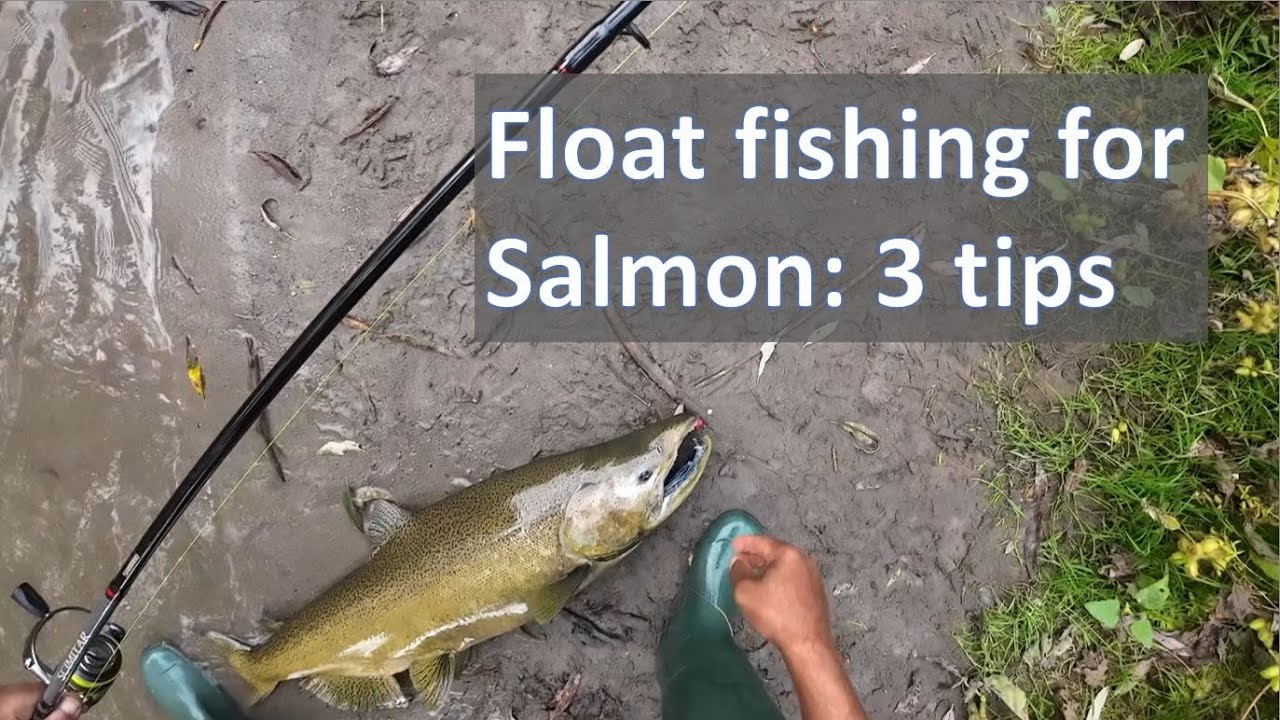
What it looks like when it works
In the video above, the first fish took after a drift that started well above the pocket and ran deep, and it broke off. The second one, same approach, stayed on. That's a normal ratio on salmon. Hooking them and landing them are separate problems, and getting the drift right solves the first one.
- Salmon regulations vary considerably by river and by reach. Several Ontario rivers have sanctuary closures during the run, and some sections restrict you to artificial lures or a single barbless hook, which rules out roe entirely.
- Check the reach you plan to fish in the current Ontario fishing regulations before you leave. Don't wait until you get there.
- A fishing licence is required.
Check conditions before you drive
Flow, water temperature, and cloud cover for Ontario rivers, with the access points that suit today's conditions.
Find today's best spotRead next
Fishing the Ganaraska this fall? When do salmon run in the Ganaraska covers run timing, the September sanctuary closure, and why a careful drift matters so much in water that crowded.
Common questions
How long should my leader be under the float for salmon?
Slightly longer than your read of the depth. Salmon hold low in the water column, and a bait drifting above them gets ignored. Aim for the bait to tick bottom now and then. That tells you it is at fish level. Constant dragging means it is too long; no contact at all usually means too short. Reset it for every new pool.
Why should you hold a float back when drifting?
A float left alone travels at surface speed while the bait lags behind in slower water below, so the fish sees your leader before the bait. Applying light tension slows the float, swings the bait forward, and presents it to the fish first. It also removes slack, so takes register more clearly and hooksets are faster.
Where should you start a float drift?
Far enough upstream that the float settles and the bait sinks to depth before reaching the holding water. That is often three or four metres on a small creek, further in heavy flow. Choose a position where the current carries the float through the target naturally, without heavy mending.
Sources
- Ontario Ministry of Natural Resources: 2026 Fishing Regulations Summary
- Flow data: Water Survey of Canada · Weather: Open-Meteo