When do salmon run in Port Hope?
Chinook stage off Port Hope harbour from early July and push into the river from mid-to-late August, peaking mid-September through mid-October. It's one of the earliest salmon rivers in Ontario, and one of the few where the best water is closed for six weeks of the run.
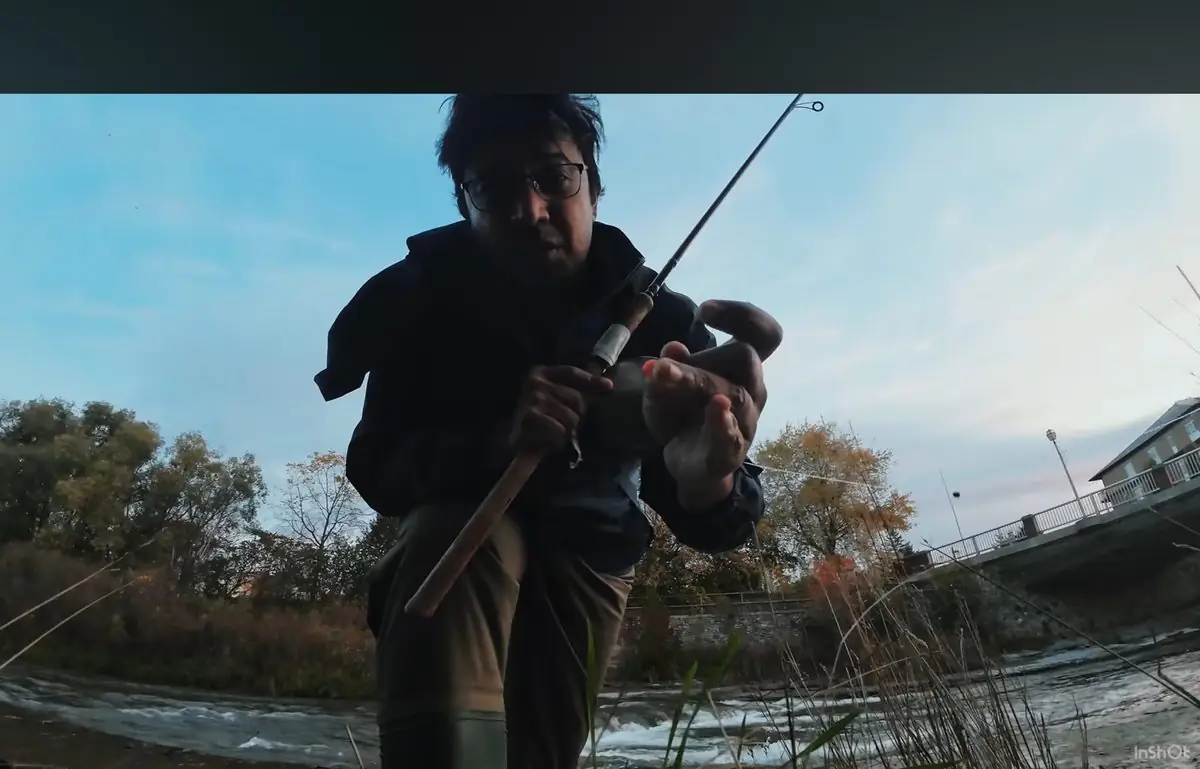
The Ganaraska runs earlier than the western rivers. Eastern Lake Ontario tributaries cool sooner, so fish stage and enter here weeks ahead of the Credit or Bronte. If you are used to fishing Toronto-area water, come two to three weeks earlier than instinct tells you.
The Ganaraska fishes best between 2 and 12 m³/s. Below that, fish hold at the harbour rather than pushing up. Above it, work the slower edges instead of the main flow.
This river takes days to drop after rain, so a mid-week storm often means a weekend of fishable, slightly-stained water. Those are the best conditions of the whole run.
See today's flow, water temperature and staging →The run, week by week
| Window | What's happening | Where to fish |
|---|---|---|
| Early July | Chinook stage off the harbour | Pier and harbour mouth |
| Mid–late August | First fish enter the river | Below the CNR bridge |
| Sept 1 – Oct 14 | Run builds, town reach closed | Below CNR bridge only |
| Oct 15 – Oct 31 | Peak, and the town reach reopens | CNR bridge up to Jocelyn St |
| Nov – Dec 31 | Coho tail off, steelhead arrive | Extended season water |
Jocelyn Street to the CNR right-of-way is closed to fishing September 1 to October 14. It reopens October 15 through December 31.
Highway 401 down to Jocelyn Street is closed to fishing all year.
Below the CNR right-of-way to Lake Ontario is open all year. It's your only in-river water during the closure.
Fishing is also prohibited for a posted distance above and below Corbetts Dam and the fishway. Confirm everything in the current Ontario fishing regulations for Zone 17 before you fish.
What a morning here is like
Fishing opens at 6 a.m. On an October weekend there are already people lined along the bank when you arrive at dawn. Weekdays are noticeably better, and no tactic will make that up on a Saturday.
Once the town reach reopens on the 15th, fish are running up through every pool almost constantly. It's quite a sight. Plenty of people come down just to watch and never make a cast.
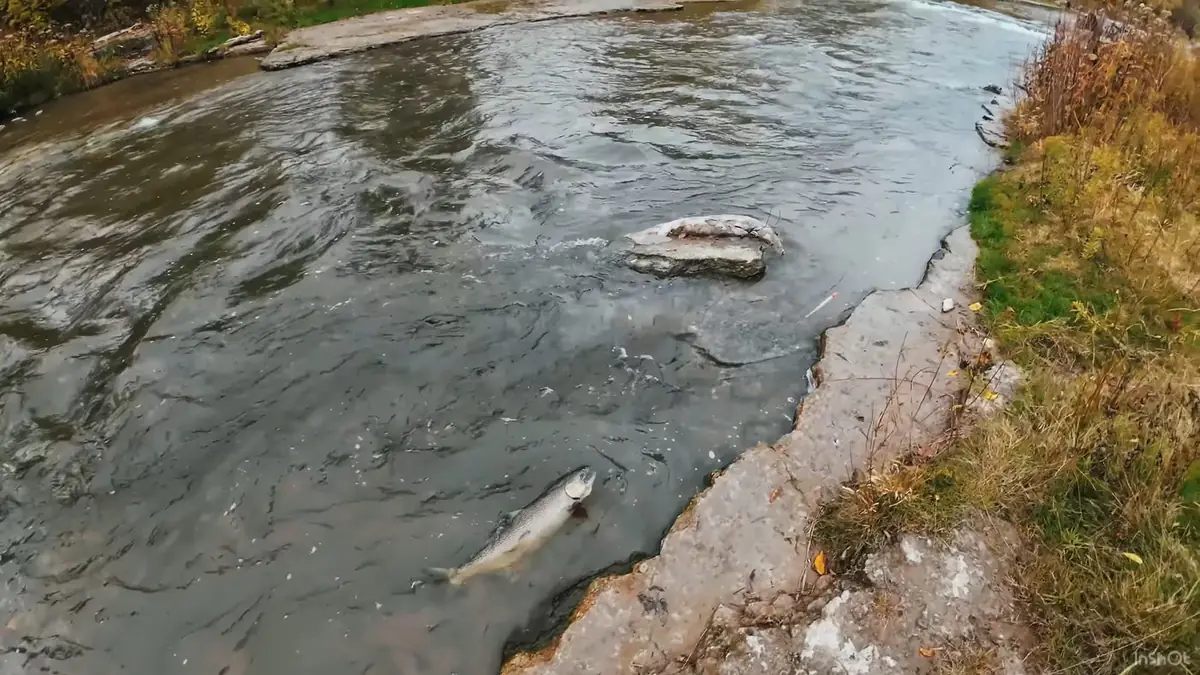
When you do find a spot, the density becomes its own problem. At peak it can be hard to keep fish off your hook. Most people are going to hook something.
Take that seriously, because most of that contact is foul-hooking, not a proper take. Ontario regulations prohibit catching or retaining a fish impaled or snagged anywhere other than the mouth, and a fish hooked that way must be released immediately. In water this thick with salmon, you need a controlled drift and a sensible leader length, or you're just snagging.
Sharing crowded water
- Take the spot at the end of the line rather than wedging into the middle of a run.
- Don't low-hole (drop in below someone and cut off their drift).
- Rotate through a pool. Fish it, step out, let the next person in.
- Land fish quickly, and release foul-hooked ones without dragging them through the pool.
Where to fish it
Port Hope Harbour and the pier hold the staging fish from July onward and stay open all year. Spoons and spinners on a spinning rod at dawn and dusk, before the fish commit to the river.
Below the CNR railway bridge is open year-round, and it is your only in-river option between September 1 and October 14. Float-fished roe or beads through the pools.
The town reach, from October 15, is the most productive water of the season, and by far the busiest.
Why this river behaves the way it does
Ontario has Conservation Authorities because of the Ganaraska. By the late 1800s the watershed had been heavily logged. At one point 45 mills operated on the main stream and its tributaries, and the cleared land flooded Port Hope again and again. In 1943 A.H. Richardson published The Ganaraska Watershed, a study that became the template for the Conservation Authorities Act. The Ganaraska Region Conservation Authority formed in 1946, among the first in the province, and began replanting the headwaters. By 1991 more than 4,200 hectares had been reforested.
It worked better than anyone predicted. The forest cut flash runoff, evened out flows, and pushed more water into headwater aquifers. For anglers, that forest, planted in the 1940s, is why the Ganaraska takes days to drop after rain. On a flashier river you chase the rain. Here you can plan around it.
Common questions
When is the best time to fish the Ganaraska for salmon?
Mid-September to mid-October is peak, but the town reach is closed until October 15. Before that date, fish below the CNR right-of-way. The week after the 15th is the most productive of the year, and the most crowded.
How long does the Ganaraska take to clear after rain?
Several days. A mid-week rain often sets up a full weekend of fishable, slightly-stained water, which is the best condition of the run.
Can you keep salmon from the Ganaraska?
Chinook and Coho have a catch limit under Zone 17 rules, but any fish hooked anywhere other than the mouth must be released immediately. Check the current regulations for limits before keeping anything.
Read next
At the other end of the season, Bronte Creek runs weeks later than anything here, into November after the Ganaraska has finished.
Half an hour west, Bowmanville Creek runs on a similar schedule in smaller, quieter water. It also has a fish ladder with a story behind it.
Timing for every Ontario river is in the river-by-river salmon run guide. For the drift itself, see the three float fishing tips that matter most in crowded water. When the salmon are done, steelhead follow them in. See where steelhead hold in a river.