 HereFishyFishy
Float fishing for steelhead, start to finish
Most steelhead caught on Ontario rivers come on a float. This article covers the rod, line, float and shot, how deep to set it, how to run a drift so the bait goes first, and how to tell a take from the bottom.
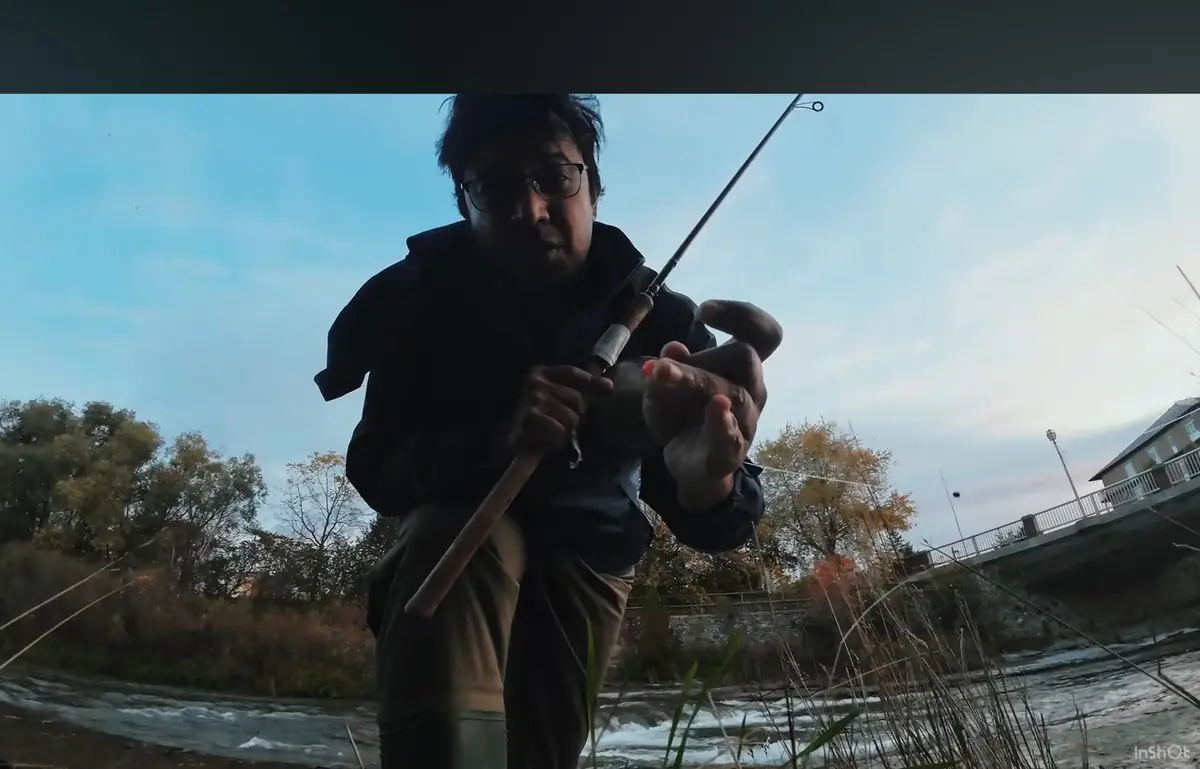
A long rod, 8 to 12 lb mono, a float sized to the flow and a short fluorocarbon leader to a small hook with a roe bag or bead. Set the depth so the bait ticks bottom, cast upstream, keep the line off the water and set the hook whenever the float stops or dips.
Why float fish for steelhead?
Steelhead in a river sit near the bottom and wait for food to come to them. A float lets a small bait drift along the bottom at the speed of the current, the way a loose egg would, for the whole length of a run. Nothing else covers a run that naturally, which is why the float catches most of the steelhead on GTA rivers from October to April.
What setup do you need?
| Part | What to use | Why |
|---|---|---|
| Rod | 10 to 13 ft float rod (centrepin), or a 10 to 12 ft medium spinning rod | Long rods hold line off the water and steer the float |
| Reel | Centrepin, or a 3000 spinning reel with a smooth drag | A centrepin feeds line with the current and gives the slowest drift |
| Main line | 8 to 12 lb monofilament | Mono floats, so it is easy to mend |
| Float | 1 to 3 g in normal flow, 4 to 6 g when the river is up | Balsa or pencil floats; the float carries the shot |
| Shot | Split shot or a tungsten bulk, plus two or three small droppers | Gets the bait down and keeps it there |
| Leader | 6 to 8 lb fluorocarbon, 18 to 24 in | Lighter in low, clear water |
| Hook | Size 8 to 12, single | Small hooks hide inside a roe bag or under a bead |
A spinning rod is how most people start, and it is all you need on small creeks like Bowmanville or Wilmot. The centrepin earns its place on long runs, where it lets the float travel 30 or 40 metres without dragging.

How should you shot the float?
The shot does two jobs: it gets the bait down quickly, and it keeps the bait just ahead of the float so it reaches the fish first.
- Bulk and droppers: most of the weight in one group about two thirds of the way down, then two or three small shot spaced below it, the last one 12 to 18 inches above the hook. This is the standard setup and works in most water.
- Strung out: small shot spaced evenly from the float to the leader. The bait sinks slowly and drifts more naturally, which suits slow, clear pools and very cold water.
- Heavier and lower: in fast or high water, move more of the weight down near the leader so the bait gets to the bottom before the head of the run.
Load the float so only the tip shows. A float that sits high hides small takes; one that sits too low gets pulled under by every swirl.
How deep should you set the float?
Steelhead feed within a foot of the bottom, and in cold water they won't move far for a bait. Set the float a little deeper than the water you are fishing. If the float stops on every drift in the same place, you are dragging bottom: shorten it by a few inches. If it never stops at all, go deeper. The right depth touches bottom now and then, not every second.
Each part of a run needs a different depth. Reset it when you move from the fast head of a pool into the deeper middle, and again for the tailout.
How do you run a good drift?
- Cast upstream of where you think the fish are, so the bait has time to sink before it gets there.
- Keep the line off the water. Hold the rod tip high and mend any line that lands on the surface, or the current will drag the float faster than the water underneath.
- Hold the float back slightly so the bait leads it downstream. Fish see the bait before the line.
- Follow the float with the rod and let it run the whole seam, then reel in and start again a step further down.
How do you tell a take from the bottom?
A steelhead take is often small. The float stops, dips, twitches or moves slightly against the current. Set the hook on all of them with a firm sweep downstream. Bottom gets hit in the same spot each drift, so you learn it quickly; a fish is anywhere.
When a fish is on, keep the rod up and let the drag or the centrepin do the work. Steelhead run hard downstream, and following on foot is often better than holding them.
Where should you float fish in late fall and winter?
As the water cools, steelhead move from fast runs into slower, deeper water: the soft middle of pools, the inside of bends and the slow edge of a seam. Below about 3 °C they barely move, so slow the drift right down and put the bait in front of them. See where steelhead hold for how to read a river.
Check the flow before you rig
Live flow, water temperature and the open reaches for Ontario steelhead rivers, with the float setup and bait for the day.
Find today's best spotRead next
Pick the bait with the best bait for steelhead, find the water with where steelhead hold, and see late fall and winter steelhead for cold-water days. Fishing without a float rod? Try steelhead on a spinning rod or fly fishing for steelhead.
Common questions
Do you need a centrepin to float fish for steelhead?
No. A 10 to 12 foot spinning rod with a 3000 reel works on most Ontario rivers. A centrepin makes a long, slow drift easier to control, which matters most on bigger water like the lower Credit or Grand.
What size float should I use for steelhead?
About 1 to 3 grams in normal flow and 4 to 6 grams when the river is up. Use the smallest float that carries enough shot to get the bait down before it reaches the fish.
How deep should I set my float for steelhead?
Set it so the bait ticks the bottom now and then. Start a little deeper than you think the water is, and shorten the depth if the float keeps stopping on the same rock.
What line and leader do you use for steelhead float fishing?
8 to 12 lb monofilament main line and a 6 to 8 lb fluorocarbon leader of 18 to 24 inches, with a size 8 to 12 hook. Go lighter on the leader in low, clear water.
How do you know if it is a take or the bottom?
You often can’t, so set the hook every time the float stops, dips or moves against the current. If it is the same spot every drift, it is bottom: shorten the depth a few inches.
Sources
- Ontario Ministry of Natural Resources: 2026 Fishing Regulations Summary
- Ontario OUT of DOORS: Steelhead 101 (Gord Ellis, 2024)
- New York DEC: Steelhead fishing on the Lake Ontario tributaries