Late fall and winter steelhead in Ontario
Most trout water in Ontario closes on September 30. Steelhead fishing on the lower reaches of the Lake Ontario tributaries is just getting good around then. This guide covers where it's still legal, where the fish sit once the water gets cold, and what to put in front of them.
Fish the lower reaches that stay open after September 30. Late October and November are best, while the water is still above about 5°C. As it cools, steelhead slide into the slowest, deepest water in a pool and stay tight to the bottom, so slow your drift right down and fish small roe bags or beads within two feet of the bottom.
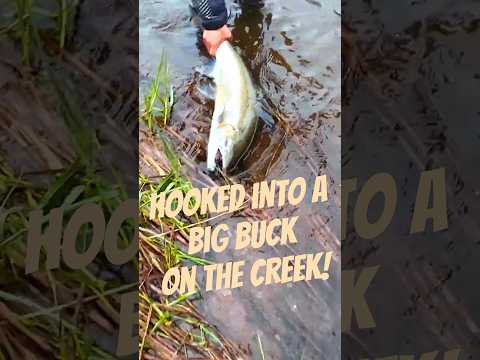
When do steelhead run in the fall?
Steelhead start following the salmon into the rivers in late September and October. The numbers build through October and November, and that stretch, before the water drops below about 5°C, is the best fishing of the fall. Fish are fresh, aggressive and spread out through the lower river.
From December the river settles into a winter pattern. Steelhead are still there, and more keep arriving on every warm rain and thaw, but they move less and take less. Expect fewer fish and more work for them right up to ice-up. In a mild winter you can keep fishing through to the spring run.
Water temperature drives almost everything, so check it before you pick a river. The conditions tool shows live flow and an estimated water temperature for each river.
Which rivers are open after September 30?
Most guides don't cover this part. Ontario closes trout and salmon on most water on September 30, but named lower reaches of the Great Lakes tributaries stay open for migratory fish. Some are open to December 31, and the lowest reaches are open all year.
| Reach | Notes |
|---|---|
| Open all year | |
| Lower Credit River | Hwy 403 to the lake |
| Lower Humber River | South of Lakeshore Blvd to Humber Bay |
| Lower-Mid Humber | Old Mill to Eglinton |
| Ganaraska River, lower | Lake to the CNR bridge |
| Bronte Creek, lower | Estuary and mouth |
| Bowmanville Creek, lower | Mouth and piers up to the CNR bridge |
| Duffins Creek, lower | |
| Rouge River, lower | Kingston Rd to the lake |
| Sixteen Mile Creek, lower | Including Oakville Harbour |
| Wilmot Creek, lower | To the CN rail tracks, and the mouth |
| Nottawasaga River, lower | Boyne to Wasaga Beach |
| Open to December 31 | |
| Middle Credit River | Britannia Rd to Hwy 407 only. Below Britannia is closed Aug 15 to Dec 31, and Norval is above the 407. |
| Bronte Creek, mid-section | Hwy 2 to Hwy 407, including the provincial park |
| Bowmanville Creek, middle | CNR bridge to King St, including Baseline Rd and the fish ladder pools |
| Duffins Creek | CNR to Hwy 2 only. Greenwood and Whitevale close Sept 30. |
| Wilmot Creek, middle | Hwy 401 to Hwy 2 |
| Ganaraska River, Port Hope | Jocelyn St to the CNR. Closed Sept 1 to Oct 14, and above Jocelyn St is closed all year. |
| Rouge River, middle | Kingston Rd to Hwy 407 |
| Sixteen Mile Creek, middle | Lakeshore Rd to Hwy 407, including Lions Valley |
| Lower Grand River | |
| Lower Saugeen River | Walkerton to Denny's Dam. No night fishing at the dam in October. |
| Lower Beaver River | Thornbury |
Watch the boundaries. Upper and middle reaches of the same rivers close on September 30, and some stretches inside open reaches are fish sanctuaries for part of the fall: the Hwy 403 to Britannia stretch of the Credit, for example. Confirm your exact reach in the current Ontario fishing regulations. If you pick a closed section in the conditions tool, it will point you to an open one on the same river.
Where do steelhead sit when the water gets cold?
Everything in where steelhead hold still applies: depth, a current break and cover. In cold water, they just won't sit in as much current.
- Above about 5°C steelhead will sit in runs and at the heads of pools, and they'll move a little to take a bait.
- From about 5°C down to 2°C they drop back into the slower, deeper parts of pools: the slow middle, the tail-out and the downstream end of holes.
- Below about 2°C they look for the slowest water the river has. That means low-gradient stretches, the soft water above log jams and the dark-bottomed slow edges of big pools. They hug the bottom and barely move.
So skip the fast water you'd fish in October and spend your time in the deep, slow water you'd normally walk past.
Expect to move. On a November trip to the Credit I fished three spots before finding fish. The first two produced nothing; at the third I hooked two steelhead, lost one and landed one. Give each spot a fair number of good drifts. If nothing happens, move to new water before you start changing baits.

What setup do you need?
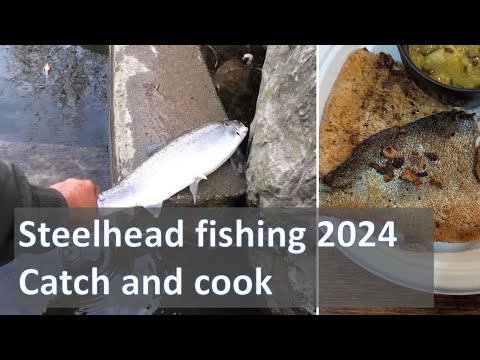
A float rod is the standard tool on Ontario rivers in winter: a long rod of 11 to 13 feet, a centrepin or spinning reel, a float, a shot line and a fluorocarbon leader. It doesn't need to be expensive. The setup in this video comes in under $150.

This is the full setup I fish on GTA rivers.
| Rod | Raven 12'9" MGX float rod |
| Reel | Raven Matrix centrepin |
| Main line | 8 lb mono |
| Leader | 6 lb Drennan fluorocarbon |
| Float | 4 g, with 4 split shot |
| Hooks | Size 10 Raven Sedge |
| Bait | Roe bags in peach and chartreuse, a pink steelhead worm, a single peach soft bead |
In winter, two adjustments matter more than which gear you buy.
- Lighten the leader when the water is low and clear. Clear winter water lets steelhead get a good look at the bait, and a heavy leader costs you bites.
- Carry enough shot to get down fast. In cold water the bait needs to reach the bottom quickly and stay there for the whole drift.
How do you float fish for steelhead in winter?
It's the same technique as in the fall, fished slower and deeper.
- Set the float deep. The bait should drift within about 60 cm (two feet) of the bottom. Winter steelhead rarely rise more than that to take a bait.
- Slow the drift down. Hold the float back slightly so the bait leads and moves slower than the surface current, the way food drifts along the bottom.
- Make more drifts through less water. Cold fish won't chase, so the bait has to pass right in front of them. Cover each holding lie thoroughly before moving on.

The three float fishing tips for salmon work for steelhead too, especially holding the float back.
What bait and colour work for winter steelhead?
Roe bags are the standard Ontario steelhead bait. They're cured salmon or trout eggs tied in mesh. Soft beads are a good second option, and they last longer in cold water. Match the size and colour to the water clarity.
| Water | Size | Colours |
|---|---|---|
| Coloured or high | Larger bags | Pink, chartreuse, orange |
| Normal | Nickel-sized | Pink, peach, natural |
| Low and clear | Dime-sized or smaller | Peach, white, light yellow |
On the day I landed fish at the third spot, I rotated through peach and chartreuse roe bags, a pink steelhead worm and a single peach soft bead. Carry a few colours so you have something to switch to when a pool goes quiet.
Don't rule out worms. A plastic or natural worm drifted under a float catches steelhead too, and it's a good change when a pool has seen a lot of roe.

How do the weather and water change the day?
- A warm rain or thaw brings rising, slightly stained water and pushes fresh fish in from the lake. The day or two as the water drops and clears after the peak is often the best winter fishing you'll get.
- A cold snap slows everything down. Fish the slowest water, fish later in the day once the water has warmed a little, and expect fewer takes.
- Low and clear water calls for a lighter leader, smaller bait, and staying back from the pool you're fishing.
What if the river is frozen?
When the rivers lock up, try plunking from the Lake Ontario shoreline near the river mouths. Cast a weighted rig with a floating roe bag, let it sit on the bottom, and wait. Steelhead cruise the shoreline near the tributaries they'll run up in spring, so you can keep fishing the same river mouths all winter.
Check the water before you drive
Live flow and water temperature for Ontario steelhead rivers, with open reaches and access points ranked for today.
Find today's best spotRead next
Steelhead follow the salmon in. For where the fall run starts and which rivers turn on first, see when salmon run in Ontario rivers. For fall, winter and spring steelhead timing on each river, see when steelhead run in Ontario.
Common questions
Can you fish for steelhead in Ontario in winter?
Yes, on the right water. Most Ontario trout and salmon water closes on September 30, but named lower reaches of Lake Ontario tributaries stay open for migratory fish, some until December 31 and some all year. Lower sections of the Credit, Humber, Ganaraska, Bowmanville, Duffins, Rouge, Sixteen Mile and Wilmot are open all year. Check your exact reach in the current Ontario fishing regulations before you go.
When is the best time to fish for steelhead in the fall?
Late October through November, while water temperatures are still above about 5°C and fish are fresh in the river and willing to move to a bait. Fishing slows as the water cools toward freezing, but steelhead stay in the rivers and can be caught until ice-up.
Where do steelhead hold in winter?
In the slowest, deepest water they can find: the slow middle and tail-out of deep pools, the downstream end of holes, and soft water just upstream of log jams. Below about 2°C they avoid current almost entirely and sit tight to the bottom.
What is the best bait for winter steelhead?
Roe bags tied with cured salmon or trout eggs are the standard, along with soft beads. In coloured or high water use bright mesh such as pink or chartreuse; in low, clear water downsize to dime-sized bags in peach, white or light yellow and lighten your leader.
How deep should I set my float for winter steelhead?
Deep enough that the bait drifts within about 60 cm (two feet) of the bottom. In cold water steelhead rarely move up through the water column to take a bait, so if your float is set too shallow you're fishing over their heads.
Where can I catch steelhead when the river is frozen?
From the Lake Ontario shoreline near river mouths, by plunking: casting a weighted rig with a floating roe bag and letting it sit on bottom. Fish cruise the shoreline near the tributaries they will run in spring.
Sources
- Ontario Ministry of Natural Resources: 2026 Fishing Regulations Summary, Zones 16 and 17
- Outdoor Canada: How to go after Ontario steelhead all season long
- Pautzke: The Southern Ontario fall/winter steelhead preview
- Great Lakes Angler: Steelhead rules on winter streams
- Flow data: Water Survey of Canada · Weather: Open-Meteo