 HereFishyFishy
Fly fishing for steelhead in Ontario
There are two ways to catch steelhead on a fly in Ontario. This article covers nymphing egg patterns under an indicator and swinging streamers on a sink tip: the rod, line and leader for each, the flies to carry, and when each one works.
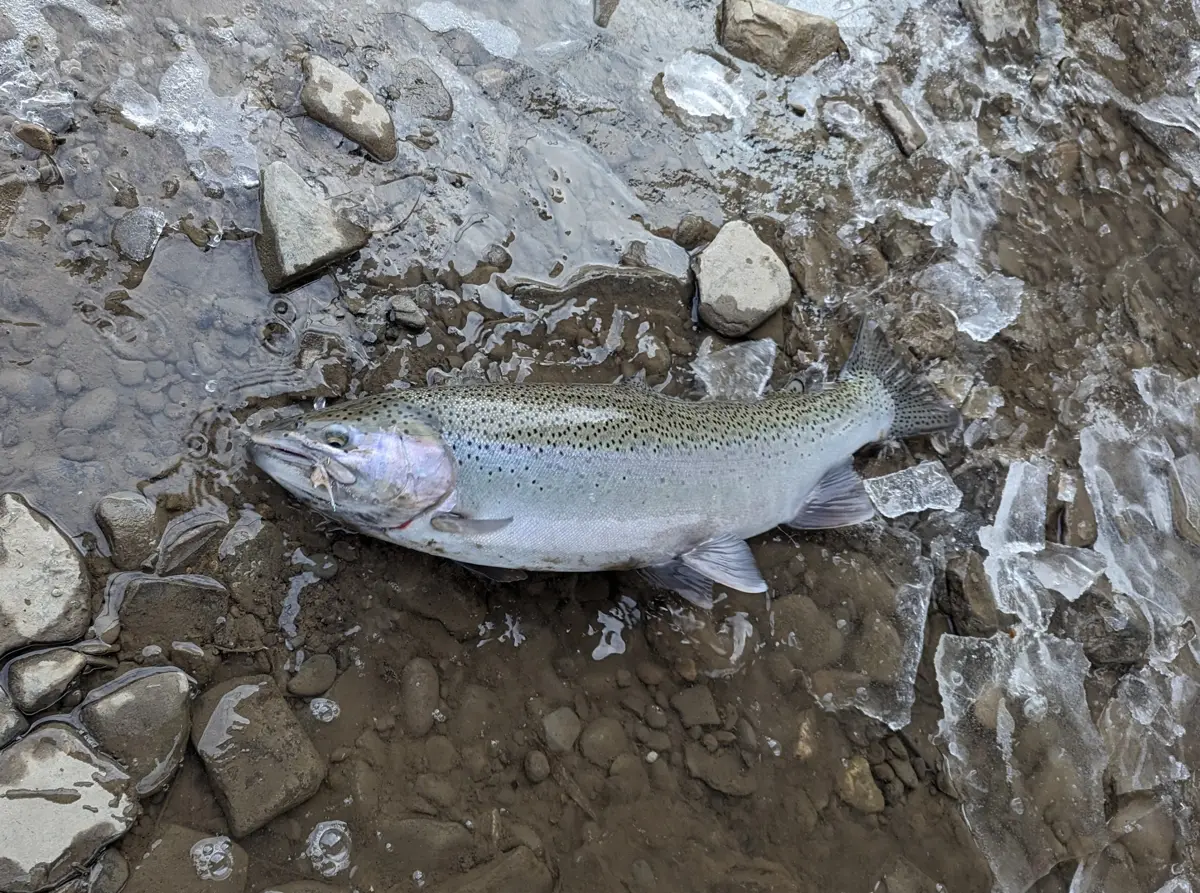
Most days, nymph an egg pattern under an indicator on a 7 or 8 weight with a 2x to 3x fluorocarbon leader. When the water is above about 4 °C and the fish will chase, swing a leech or sculpin on a sink tip through the runs. In very cold water, slow everything down and keep the fly on the bottom.
Nymphing or swinging?
| Approach | What it is | When it works |
|---|---|---|
| Indicator nymphing | Egg patterns, worms and stoneflies drifted near the bottom under an indicator | Most days, cold water, pressured pools and clear water |
| Swinging streamers | A leech or baitfish pattern swung across the current on a sink tip | Water above about 4 °C, long runs and tailouts, fish that chase |
Indicator nymphing is close to float fishing with a fly rod, and it catches more fish on most Ontario rivers. Swinging covers more water and the takes are hard, but it relies on fish willing to move for a fly.
What setup do you need for indicator nymphing?
| Part | What to use | Notes |
|---|---|---|
| Rod | 7 to 8 wt, 9 1/2 to 10 ft single-hand | 8 to 9 wt if salmon are still in the river |
| Line | Weight-forward floating line | Easy to mend |
| Leader | 9 to 10 ft fluorocarbon, 2x to 3x | 0x to 2x for salmon; lighter in low, clear water |
| Weight | Split shot 12 to 18 in above the fly | Enough to tick bottom |
| Indicator | Set at about 1.5 times the water depth | Yarn or foam |
| Flies | Size 8 to 14 | Two flies where allowed: an egg and a nymph or worm |
Which flies should you carry for nymphing?
| Fly | Size | Colours | When |
|---|---|---|---|
| Single egg | #10 to 14 | Orange, peach, chartreuse, pink | The first fly to tie on. Smaller and paler in clear water |
| Egg cluster | #8 to 12 | Orange, pink, peach | Fall and winter, when salmon eggs are in the river |
| Sucker spawn | #12 to 14 | Cream, peach, chartreuse | Spring only, when suckers spawn in the same runs |
| San Juan worm | #10 to 14 | Red, pink, wine | Rising or stained water after rain |
| Stonefly nymph | #8 to 10 | Black, weighted | Fast runs, and fish that ignore eggs |
How do you nymph for steelhead?
Cast upstream, mend the line so the indicator drifts at the speed of the current, and let the fly tick along the bottom. Follow the indicator with the rod tip, and set on anything: a stop, a dip, or a twitch against the current. Work the seams, tailouts and the heads of pools, a step at a time. If the indicator never stops, add weight or set it deeper; if it stops every drift in the same place, take some off.
What setup do you need for swinging?
Two setups work. The simplest is the same single-hand rod with a 10 to 15 ft sink tip looped onto the line. The other is an 11 to 13 ft switch or spey rod, which casts a sink tip much further with less effort and suits big runs on the lower Credit, Grand and Saugeen. Either way, use a short, stout leader of 3 to 4 ft of 10 to 12 lb (12 to 15 lb for salmon): fish hit a swung fly hard, and a short leader keeps the fly down with the tip.
Which flies should you carry for swinging?
| Fly | Size | Colours | When |
|---|---|---|---|
| Intruder or marabou leech | 2 to 4 in | Black and blue, purple, pink and orange | Big, soft profile that moves in slow current |
| Egg-sucking leech | #2 to 6 | Black or purple with an orange or pink head | Fish that chase but won’t eat an egg |
| Sculpin | #2 to 6 | Olive, tan, black | Cold water and fish tight to the bottom |
| Woolly Bugger | #4 to 8 | Black, purple, olive | Small water and a single-hand rod |
How do you swing a fly for steelhead?
Cast across and a little downstream, throw one upstream mend so the fly sinks, then let the current swing it across the run on a tight line. The take usually comes as the fly slows at the end of the swing, so let it hang below you for a few seconds before the next cast. Take a step downstream after every cast and cover the run from top to bottom. When a fish grabs, don't strike; let it pull the line tight, then lift.
What changes in very cold water?
Below about 3 °C, steelhead sit near the bottom of deep, slow pools and barely move. Nymph a small, pale egg very slowly, right on the bottom, and give the fish time to see it. If you swing, use a heavier tip and a sculpin and slow the swing right down. Midday is often better than first light in January and February, once the sun has warmed the water a little.
Check the water before you pick a fly
Live flow and water temperature for Ontario steelhead rivers. Pick Fly on the form to get the egg patterns and streamers for the day.
Find today's best spotRead next
For the same egg patterns on a float rod, see float fishing for steelhead; for colours and sizes, the best bait for steelhead; and for resident trout on the fly, euro nymphing the Upper Credit.
Common questions
What weight fly rod do you need for steelhead in Ontario?
A 7 or 8 weight, 9 1/2 to 10 ft, single-hand rod covers most rivers. Use an 8 or 9 weight if salmon are still in the river. For swinging, an 11 to 13 ft switch or spey rod makes long casts easier, but the single-hand rod with a sink tip works.
What flies catch steelhead in Ontario?
Egg patterns most of all: a single egg in size 10 to 14, egg clusters in fall and winter, and sucker spawn in spring. A San Juan worm after rain and a stonefly nymph round out the nymphing box. For swinging, an intruder or marabou leech, an egg-sucking leech, a sculpin and a Woolly Bugger.
Should I nymph or swing for steelhead?
Nymph egg patterns under an indicator most of the time, especially in cold water when fish won’t move. Swing streamers when the water is above about 4°C and fish are willing to chase, through long runs and tailouts.
What leader do you use for steelhead indicator fishing?
A 9 to 10 ft fluorocarbon leader of 2x to 3x, with split shot 12 to 18 inches above the fly and an indicator set at about one and a half times the depth.
Can you use egg flies on artificial-only reaches?
Yes. Egg patterns, worms and nymphs tied as flies are artificial lures, so they are allowed where bait is not. Check your reach in the current Ontario fishing regulations.
Sources
- Ontario Ministry of Natural Resources: 2026 Fishing Regulations Summary
- New York DEC: Steelhead fishing on the Lake Ontario tributaries
- Ontario OUT of DOORS: Steelhead 101 (Gord Ellis, 2024)